
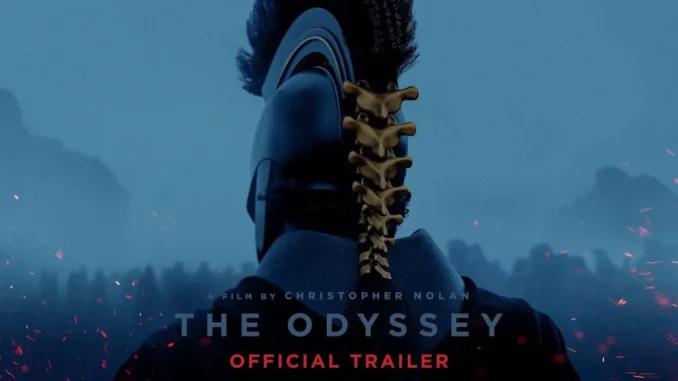
The Odyssey is an upcoming epic fantasy-action film written and directed by Christopher Nolan, based on Homer’s ancient Greek poem The Odyssey. Scheduled for release on July 17, 2026, the film is positioned as Nolan’s most ambitious large-scale mythological story to date, combining practical IMAX filmmaking with a deeply character-driven interpretation of one of literature’s foundational epics.
The story follows Odysseus, king of Ithaca, after the Trojan War. Rather than returning home triumphantly, he becomes trapped in a decade-long journey across hostile seas, divine curses, and mythical lands. Meanwhile, back in Ithaca, his wife Penelope and son Telemachus struggle to preserve their kingdom from ambitious nobles who assume Odysseus is dead.
Odysseus survives Troy but cannot escape the consequences of pride, ambition, and divine interference. His voyage home becomes a test not only of endurance but identity itself.
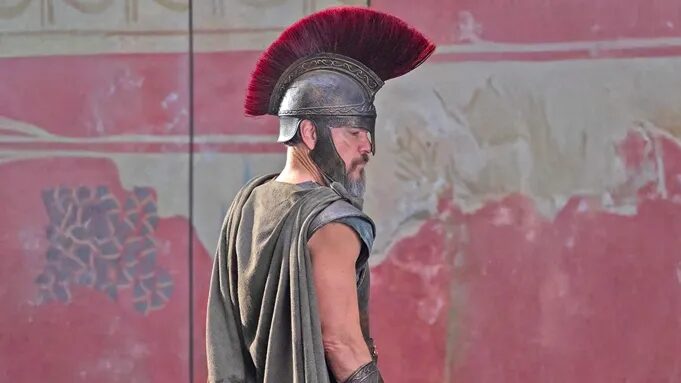
Odysseus — Played by Matt Damon
Odysseus is the emotional and philosophical center of the film. Traditionally known as a warrior-king famed for intelligence rather than brute strength, Nolan’s interpretation appears to lean heavily into psychological exhaustion and survivor’s guilt.
In the original epic, Odysseus is both heroic and flawed:
- brilliant strategist,
- manipulative storyteller,
- proud tactician,
- and emotionally isolated leader.
Damon’s version appears older, weathered, and burdened by years of war and wandering. The trailers reportedly show him confronting monsters and storms, but also moments of vulnerability and disorientation.
A major thematic question surrounding Odysseus is whether he still belongs in Ithaca after everything he has endured. Nolan seems interested less in “winning the journey” and more in whether identity survives prolonged violence and separation.
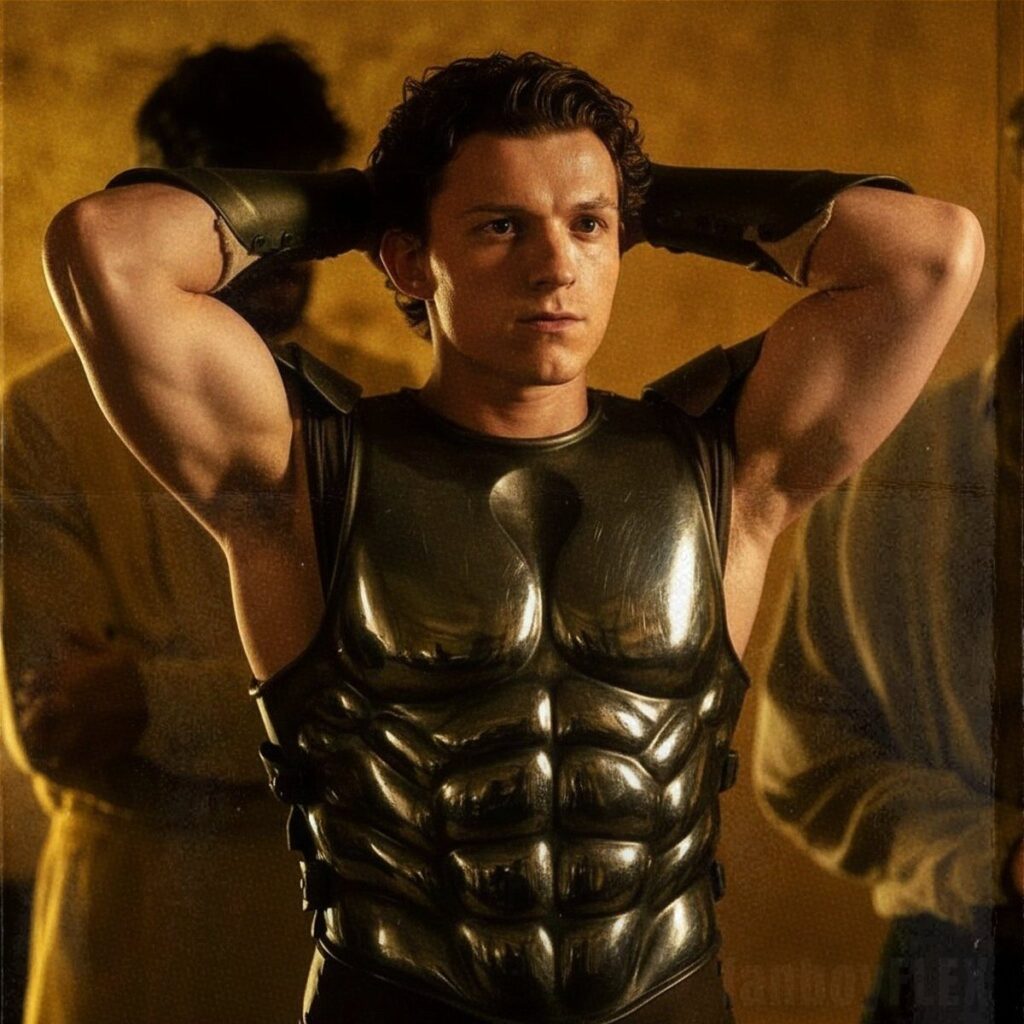
Telemachus — Played by Tom Holland
Telemachus, Odysseus’s son, may ultimately become one of the film’s breakout characters.
In Homer’s poem, Telemachus begins as uncertain and powerless, living under the shadow of a father he barely remembers. As the story progresses, he matures into a leader capable of defending his household and standing beside Odysseus.
Early footage and descriptions suggest Nolan greatly expands Telemachus’s role.
His storyline appears to focus on:
- longing for a mythic father,
- resentment toward Ithaca’s corruption,
- and the struggle to define masculinity and leadership without guidance.
Tom Holland reportedly portrays him with a mixture of youthful desperation and emerging authority. His emotional investment in Odysseus’s return may provide the film’s emotional anchor.
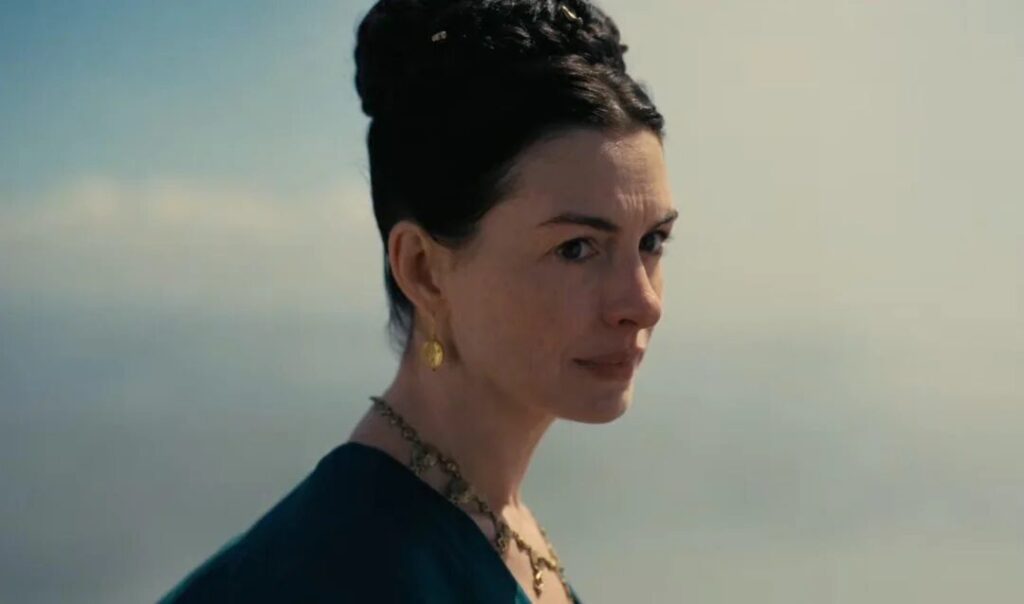
Penelope — Played by Anne Hathaway
Penelope has historically been depicted as the patient and loyal wife waiting for Odysseus. Nolan’s version appears more politically active and psychologically layered.
Rather than functioning purely as a symbol of loyalty, this adaptation reportedly emphasizes Penelope as Ithaca’s true stabilizing force during Odysseus’s absence.
She must:
- outmaneuver predatory suitors,
- maintain political order,
- protect Telemachus,
- and preserve hope despite increasing evidence that Odysseus may never return.
Anne Hathaway’s performance is expected to balance intelligence, grief, diplomacy, and suppressed anger. The dynamic between Penelope and Odysseus may become one of the film’s strongest emotional elements because both characters return psychologically transformed by years apart.
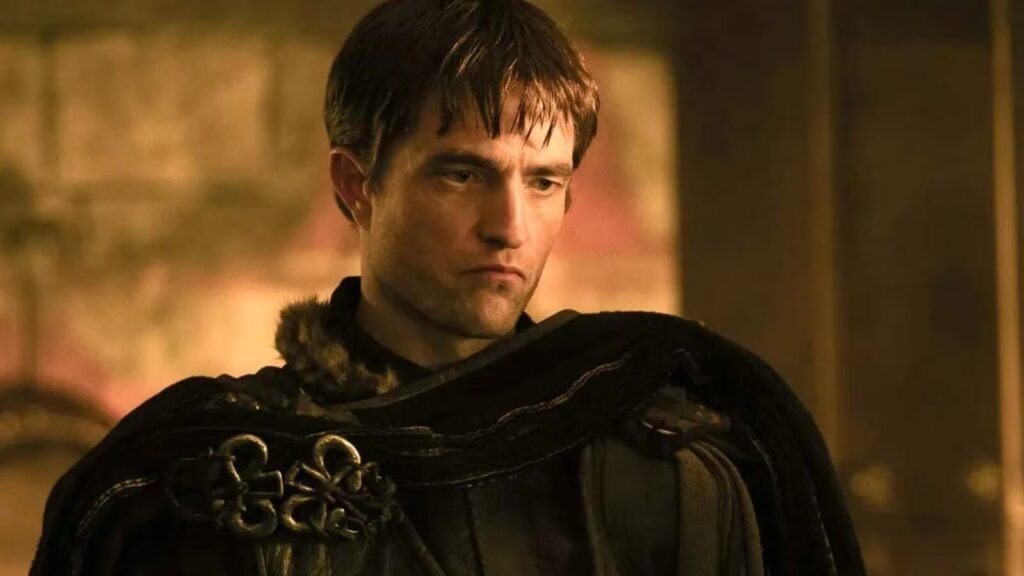
Antinous — Played by Robert Pattinson
Antinous is one of the suitors attempting to claim Penelope and seize Ithaca during Odysseus’s absence.
In many adaptations he is simply arrogant and cruel, but Nolan reportedly expands him into a more substantial political antagonist.
Pattinson’s version appears charismatic, manipulative, and dangerously intelligent rather than merely violent. He represents opportunism during societal collapse:
- a man exploiting uncertainty,
- challenging inherited power,
- and attempting to replace Odysseus symbolically as well as politically.
His interactions with Telemachus in the trailer reportedly establish a tense psychological rivalry centered on legitimacy and masculinity.
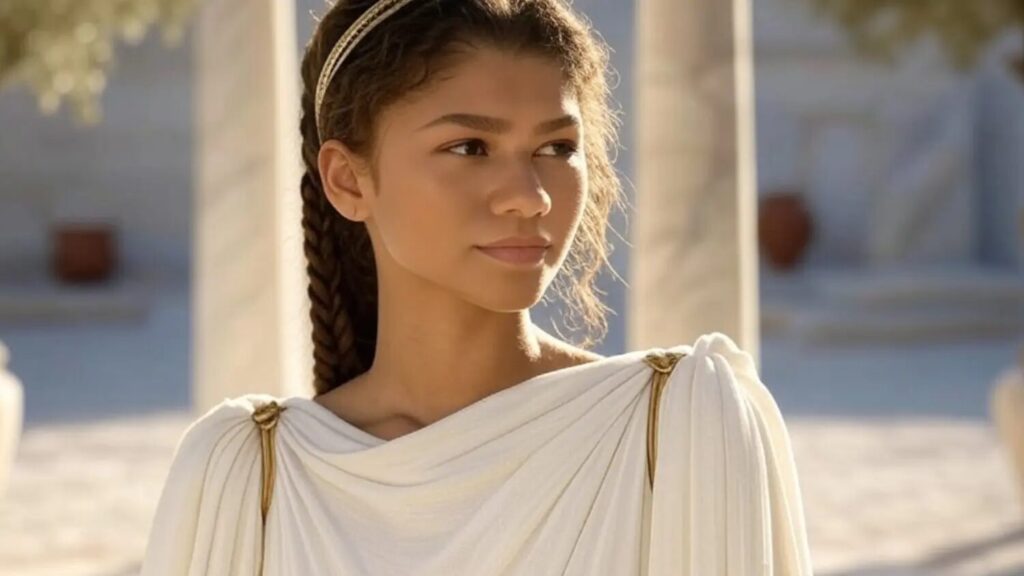
Athena — Played by Zendaya
Athena, goddess of wisdom and warfare, traditionally acts as Odysseus’s divine protector.
Nolan’s approach appears to portray Athena as both mentor and manipulator.
Rather than a simple benevolent deity, she may embody:
- destiny,
- strategic intelligence,
- and the dangerous intersection between divine will and human agency.
Zendaya’s casting suggests a younger, emotionally perceptive interpretation of Athena. Her relationship with Telemachus may become especially important, guiding him through his transition into adulthood.
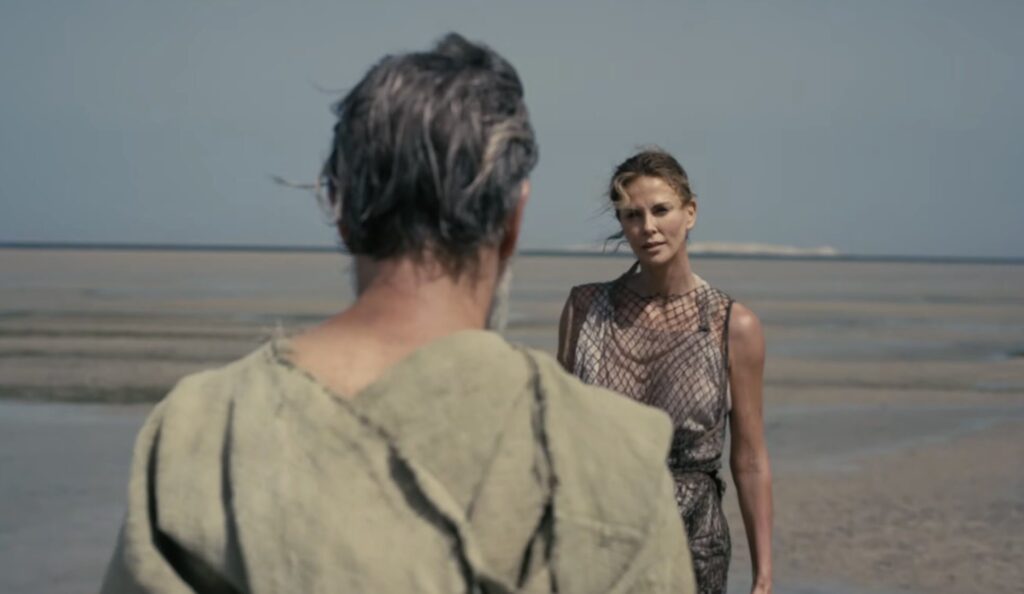
Circe — Played by Charlize Theron
Circe is one of the most iconic figures in Greek mythology: a sorceress capable of transforming men into animals.
The trailers reportedly frame her less as a villain and more as a philosophical force challenging Odysseus’s understanding of control and fate.
Charlize Theron’s portrayal appears enigmatic and emotionally restrained. Circe may function as a mirror to Odysseus:
- both isolated,
- both wielding power,
- and both trapped by identity.
If Nolan follows the source material closely, Circe could become one of the film’s most morally ambiguous characters.
Supporting Characters
Benny Safdie as Agamemnon
Agamemnon represents the destructive legacy of the Trojan War and the failures of heroic leadership.
Jon Bernthal as Menelaus
Menelaus may help contextualize the aftermath of Troy and the fractured state of the Greek world after victory.
John Leguizamo as Eumaeus
Eumaeus, Odysseus’s loyal swineherd, traditionally symbolizes faithfulness and humility. He often serves as Odysseus’s first true ally upon returning home.
Himesh Patel as Eurylochus
Eurylochus is Odysseus’s skeptical and pragmatic second-in-command, often challenging his decisions.
You May Also Be Interested In
Gremlins 3 Teaser Trailer
New Movies This Weekend (September 11–13, 2026): Practical Magic 2, The Uprising, Runner & More
Jaw-Dropping Sneak Peek: HBO's Harry Potter Trailer Reveals Hogwarts, Quidditch and More
September 2026's Most Anticipated Horror Movies
New Movies This Weekend (August 28–30, 2026): The Dog Stars, Coyote vs. Acme, Buddy & More
Weekend Box Office August 21-23, 2026: Spider-Man: Brand New Day Holds #1 with $39 Million


